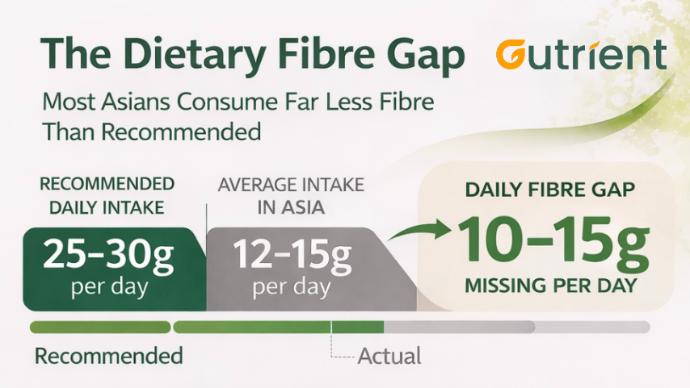
The Fibre Gap – a real deficiency in Asia
Adults require 25–30g of dietary fibre daily, yet many fall well short of this target.
Modern diets deliver plenty of calories and protein, but very little fibre.
This gap may seem invisible, but its effects are felt every day.
Why the Fibre Gap Matters
Fibre is essential fuel for your gut. When intake is low, it can result in:
- Gut bacteria under-fed (microbiome imbalance)
- Digestive comfort suffers (bloating, bowel irregularity)
- Blood sugar and cholesterol control weaken (unstable energy and high LDL-C)
- Faster digestion and lower Satiety (quick to get hungry)
- Long-term health risks (metabolic syndromes, colorectal cancers)
In short, the fibre gap quietly undermines gut health—and when the gut struggles, the rest of the body follows.

Why It’s Hard to Get Enough Fibre from Food Alone
Even with good intentions, many people find it challenging to meet fibre needs consistently:
• Busy lifestyles limit whole-food meals
• Some high-fibre foods feel harsh on sensitive guts
• Sudden increases in fibre can cause discomfort
That’s why not all fibres are equal, and why how you close the fibre gap matters.
A Smarter Way to Close the Gap

1. Prioritise Gentle, Functional Fibre
Look for soluble, fermentable fibres that nourish the gut without irritation. One of the most researched soluble fibre is beta-glucan, naturally found in barley naturally.
Beta-glucan:
- Forms a gentle gel in the gut
- Is slowly fermented by beneficial bacteria
- Supports the production of short-chain fatty acids that strengthen the gut lining
- Helps improve stool regularity, cholesterol balance, and blood sugar response
This makes it especially suitable for daily,
long-term gut support.
2. Build Fibre Consistently (Not Suddenly)
Closing the fibre gap works best when fibre intake is:
- Steady (every day, not once in a while)
- Well-tolerated, so your gut can adapt
- Easy to maintain, even on busy days
Consistency matters more than extremes.
3. Combine Whole Foods with Targeted Supplementation
Whole foods should always form the foundation—vegetables, whole grains, legumes, and fruits.
But when diet alone isn’t enough, targeted fibre supplementation can reliably
help bridge the gap.
By delivering effective soluble fibre in a simple format, Gutrient helps you meet your fibre needs without overhauling your diet.
The Bottom Line
The fibre gap is one of the most common—and most fixable—nutrition shortfalls today.
Closing it supports:
• A healthier gut microbiome
• Better digestion and comfort
• More stable energy and appetite
• Long-term metabolic and heart health
Feed your gut well, consistently—and everything else works better.