Beta-Glucan — The Smart Prebiotic Fibre Your Gut Needs
What is Beta-Glucan?
Beta-glucan is a water-soluble prebiotic dietary fibre naturally occurring between the husk and the endosperm of barley grains. Barley beta-glucan is a polysaccharide comprised of linear chains of D-glucose monomers linked by β-(1-3) and β-(1-4) bonds. Barley beta-glucan has been clinically proven to lower cholesterol levels and is also approved by the US Food & Drug Administration (FDA), the European Food Safety Authority (EFSA) and the Singapore Food Agency (SFA) - amongst many other countries' food authorities.
Various types of beta-glucan can be found from oats, baker's yeast and mushrooms, however not all of them have the same health benefits. Beta-glucan extracted from barley and oats is the only one clinically proven and scientifically accepted by regulatory agencies to lower cholesterol.
How much Beta-Glucan should I consume daily?
The FDA, ESFA and SFA all recommend a daily intake of 3g (3,000mg) of beta-glucan for its benefits to be effective in lowering LDL-C cholesterol.
A mere 15g (2-3 tablespoons) of Gutrient Fibre will give you this daily requirement of beta-glucan. In comparison, you need 100g of oatmeal to obtain this same level of beta-glucan. You can find capsule supplements on the market for beta-glucan but dosages are between 250mg to 500mg which is far below the recommended 3,000mg. To ensure your body gets the full health beneftis, it is recommended one consumes it daily.
How does beta-glucan lower LDL cholesterol?
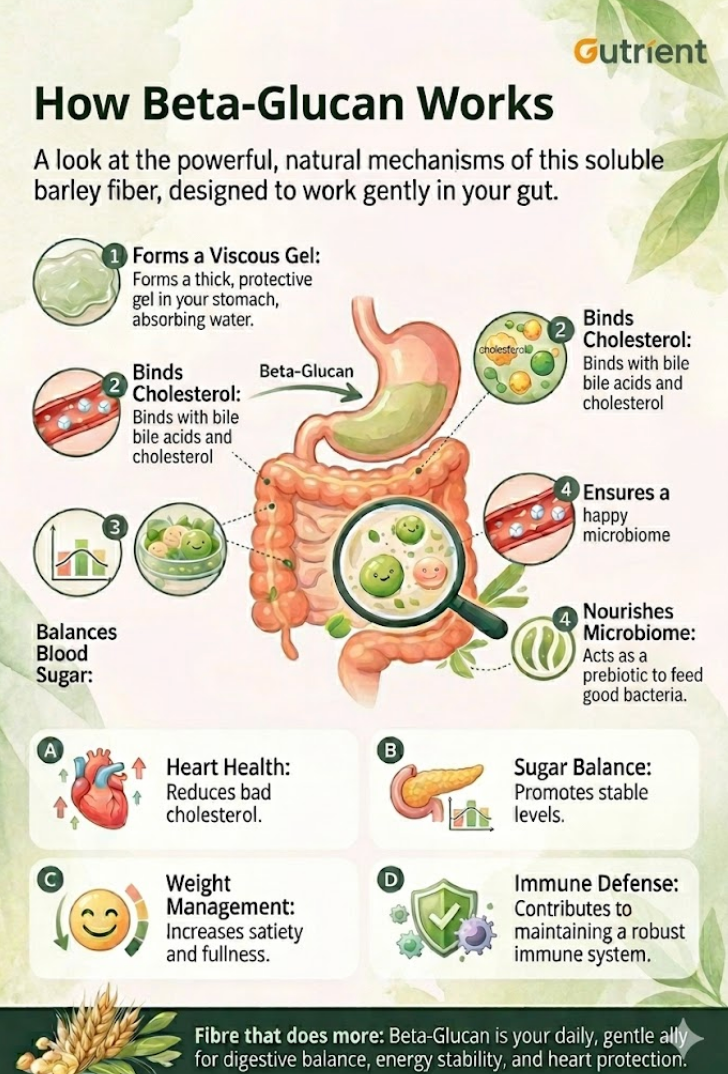
Beta-glucan acts as a highly viscous, soluble fiber that fundamentally changes how your body manages cholesterol through a process called bile acid sequestration.
- Forming the "Gel Trap": In the small intestine, beta-glucan dissolves to form a thick, viscous gel. This gel "traps" and binds to bile acids—digestive fluids produced by the liver that are essential for fat absorption.
- Interrupting the Cycle: Under normal conditions, bile acids are recycled back to the liver. However, the beta-glucan gel prevents this reabsorption, causing the bile acids to be naturally excreted from the body instead.
- Forced Replenishment: To replace the lost bile acids, the liver must produce new ones. It does this by pulling LDL ("bad") cholesterol directly from your bloodstream.
- Reducing LDL-C: As the liver continuously uses circulating cholesterol to replenish its bile supply, your overall blood cholesterol levels drop.
By effectively "mopping up" bile acids and forcing the liver to use up stored cholesterol, beta-glucan helps maintain healthy cardiovascular function and significantly reduces the long-term risk of heart disease.
How safe is beta-glucan and are there any side effects?
There are no known negative side effects in the consumption of beta-glucans. Toxicology studies have been conducted on long term consumption and on high dosage consumption and the result is beta-glucan is safe as it does not have the ability to over stimulate the immune system. However, gluten is a found in wheat, rye and barley so people who are gluten sensitive should avoid consumption of such foods. If unsure, always consult your physician for professional advice.
Gutrient Fibre contains 20% natural high-density beta glucan (EUROFIN TESTED)
1. Keeps Your Heart Healthy
“Cholesterol Catcher” - It acts like a tiny magnet in your gut, catching and soaking up "bad" cholesterol before it can get into your blood. This helps keep your arteries clear and your heart strong.
2. Stops Sugar Spikes
“Energy Anchor” Upon consumption, it turns into a thick gel in your stomach, it slows down how fast your body absorbs sugar. This gives you steady energy instead of a "sugar crash" after eating.
3. Helps You Feel Full
“Tummy Tamer” That same gel-like texture makes you feel satisfied for longer. It’s a great tool if you're trying to manage your weight because it cuts down on the urge to snack.
4. Boosts Your Natural Defences
“Immune Cell Commander” It wakes up your immune cells, making them more alert and ready to fight off germs and keep your gut barrier strong.
5. Feeds Your "Good" Bacteria
“Probiotic Buffet” It’s a favourite food for the probiotics, the healthy bacteria living in your gut. When they are well-fed, your digestion stays smooth and you feel less bloated.How Much Beta-Glucan Do You Need?
Research-backed intake guidelines:
- 1–2 g/day → digestion & microbiome support
- 2–4 g/day → glucose stability
- 3 g/day → cholesterol reduction
Gutrient provides these clinically supported levels in easy daily servings.